Effortless Organization with a Weekly Planner Canva Template
Let’s be honest: designing a planner from scratch is a significant time sink. You spend hours fiddling with text boxes, aligning columns, and hunting for the right icons before you even get to the content. This is where a high-quality Weekly Planner Canva Template changes the game. It isn't just a set of pre-made boxes; it is a strategic design asset. Think of it as the structural foundation of your visual planning, allowing you to bypass the technical hurdles and focus immediately on strategy, aesthetics, and personalization.
The Anatomy of a Versatile Design Asset
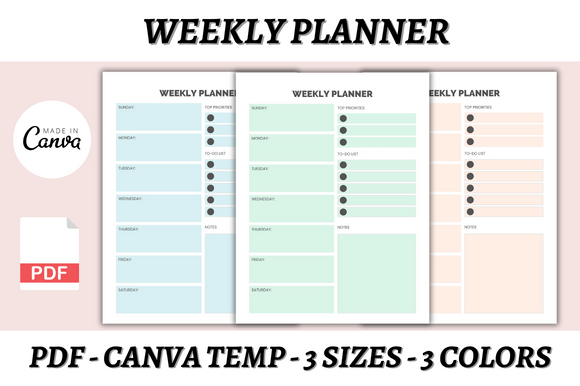
When you open a professional Weekly Planner Canva Template, you are greeted with more than just a calendar grid. These templates are built with a specific visual personality in mind—often balancing clean sans serif font styles with functional layouts. The appeal lies in the "modernity of typography" combined with intuitive visual hierarchy. The headings guide the eye, the body text remains legible at small sizes, and the spacing is calculated to reduce visual clutter. Whether you prefer a minimalist aesthetic with ample white space or a more structured look with color blocking, the template provides a cohesive brand identity starting point. It serves as a premium font playground where the typography has already been curated to ensure harmony between headers and body copy.
Real-World Applications: From Personal Use to Commercial Sales
The true power of a Weekly Planner Canva Template lies in its adaptability across various industries. For content creators and bloggers, it is an essential tool for editorial planning. You can map out your social media posts, blog schedules, and email campaigns visually before writing a single word. For Etsy and Shopify storekeepers, these templates are a direct path to revenue. With "Done For You" designs, you can rebrand the template with your own logo, adjust the color palette, and sell the digital download to your audience. This eliminates the need to hire a graphic designer for every new product drop. Furthermore, small business owners and entrepreneurs can use these templates for internal project management, creating printable schedules for teams or digital guides for clients. The flexibility to switch between an A4 layout for desk printing and a mobile-friendly digital version ensures your planning remains consistent across all devices.
Customization: Making the Template Your Own
A template should never look like a template once you are finished with it. The goal is to inject your unique brand identity into the design. Start by evaluating the font pairing. Does the template use a bold serif font for headers? Consider swapping it out for a handwritten font to add a personal touch, or a geometric display font for a more corporate feel. Canva makes this process intuitive; you can adjust sizes, kerning, and weights with a few clicks. Next, look at the layout. A rigid grid works well for accounting, but a creative agency might prefer a more fluid layout with space for mood board images. Remember that readability is paramount. While a script font looks beautiful, ensure it is legible when printed at smaller sizes. The best approach is to treat the template as a wireframe—keep the structure but replace the visual elements to match your specific aesthetic.
Strategic Design and Typography Considerations
Choosing the right Weekly Planner Canva Template requires a critical eye. Do not just look at the colors; look at the typography. Good modern typography creates a rhythm that makes the planner usable. If the font is too decorative, the utility suffers. If it is too plain, the design feels uninspired. Evaluate how the text interacts with the negative space. Is there enough room for users to write notes? Does the visual hierarchy clearly distinguish between days of the week and specific time slots?
Furthermore, consider the commercial aspect. If you are selling these planners, you must understand commercial font licensing. Fortunately, Canva provides a library of fonts cleared for commercial use, but always double-check the specific license of any external elements you import. By focusing on graphic design principles—contrast, alignment, repetition, and proximity—you can transform a basic planner into a high-value product that enhances your audience's productivity and strengthens your market position.